Porcelain Dinnerware Chip Test: How to Judge a Sample
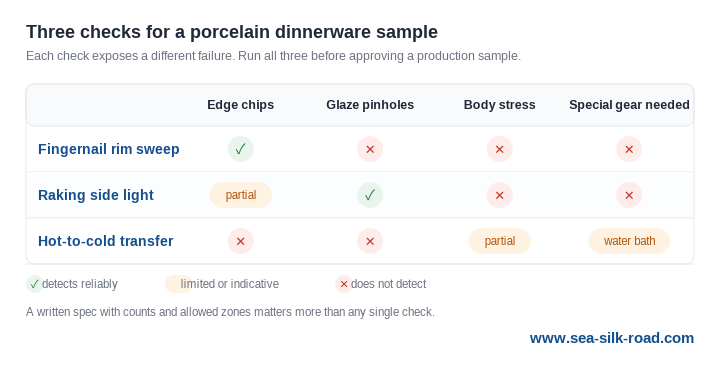
A porcelain plate that looks perfect in a photo can arrive with a chipped rim or a pinholed glaze. The difference between a clean first shipment and a claim six weeks later is usually a sample check that someone skipped. You do not need a lab to catch most of it: a consistent light source, a fingernail, a felt-tip pen and a hot-to-cold transfer will expose the faults that matter. This guide gives you the three checks to run on a dinnerware sample and the pass criteria to write into your spec so the answer is a number, not an opinion.
Why the Rim Is Where Samples Fail First
Chips start at the edge because that is the thinnest, least-supported part of a plate or dish. A glaze layer that stops just short of the rim leaves the clay body exposed, and a single knock during packing turns that into a visible nick. When you inspect a sample, run a fingernail slowly around the entire rim, including the foot ring underneath. A smooth glide means the glaze covers the edge; a catch or a rough patch is a site that will chip under normal use. Do this on every piece in a sample batch, not just the one on top, because glaze dipping is a manual step and coverage varies piece to piece.
Record what you find as a count out of the pieces checked. Ten plates with two rough rims is a 20 percent fault rate, which is a number you can negotiate against. "Some edges felt rough" is not.
Reading Glaze Pinholes and Surface Defects
Pinholes are tiny gaps in the glaze that show as dark dots when light rakes across the surface. They matter for dinnerware because they trap food residue and can look like dirt to the end customer. Set the sample under a strong side light, or hold it at a shallow angle to a window, and scan the eating surface and the rim. Mark any dot you can see with a removable felt-tip, then wipe the plate: a mark that disappears was surface dust, while one that stays is in the glaze.
A single pinhole on a decorative vase is a cosmetic detail. On a plate that will carry food, a cluster of them in the eating area is a rejection reason. Agree with the supplier in advance on how many are allowed and where, especially on the flat centre and the inner rim where cutlery contacts the surface. Put the rule in writing with a simple diagram showing the allowed and forbidden zones; it removes the argument about whether a defect is "in a visible place."

The Thermal Shock Check Anyone Can Run
Porcelain is fired at high temperature and is stable in normal use, but a body and glaze that were cooled badly can hold internal stress. The common field check is a hot-to-cold transfer: warm the sample in water, then move it to a cooler bath and look for new cracks or a dull ring when you tap it. Do this on a spare sample, not the piece you plan to photograph, and treat it as a comparative test rather than a guarantee. What you are looking for is a difference between samples from the same batch: if one piece cracks and three do not, the batch has an inconsistency worth asking about.
The pass criterion should be stated plainly in your spec: a defined number of cycles at a defined temperature difference, with zero visible cracks and no change in the tapping sound. Without the numbers, the test is only a conversation. With them, both sides can repeat it and get the same answer.
Turning Observations Into a Spec Buyers Can Enforce
The value of a sample test is not the test itself; it is the clause it produces. Convert each observation into a measurable line: maximum number of rough rim points per piece, allowed pinhole count and location, and the thermal shock condition with a zero-crack requirement. Add the inspection method, because a rule that says "check the rim" means different things to different factories. Specify the light, the tool and the count size, and attach a photo of a passing and a failing edge.
Keep the rejected samples. A sealed bag with a dated label is far more persuasive in a claim discussion than an email description, and it gives your own team a physical reference for the next order. When the factory changes a glaze supplier or a firing schedule, pull that reference out and repeat the same three checks before the new batch ships.
When to Escalate Beyond the Basic Checks
Hand checks catch gross faults, but some orders need more. If the dinnerware will go through a commercial dishwasher, or it will be stacked and shipped in bulk without individual boxes, ask the supplier for a documented test report on glaze durability and thermal performance, and check who issued it. Food-contact requirements also depend on the destination market, so request the relevant declaration rather than assuming a general "food safe" label covers your sale.
None of this needs to slow a small order down. Run the three checks on the sample, write the results into the spec, and keep the evidence. You will know before production whether the supplier can meet your standard, and you will have something concrete to point at if they do not. For help matching a dinnerware shape and glaze to a spec your factory can actually hit, browse our porcelain range and send us the sample you want tested.
Planning a promotional gift order?
Send your spec and target quantity for a quote and a digital proof.
Get a free quote


