Laptop Briefcase Sizing: 4 Measurements Before You Order 500
Four numbers decide whether a laptop briefcase works for the buyer, and most order sheets carry only one of them. The number that matters is the interior width across the base panel, measured before the bag is loaded. Everything else — the depth, the gusset height and the zip opening — is what turns a bag that technically fits into one that closes easily or fights the user every morning. Order 500 units against those four numbers and a written tolerance, and returns stay low.
The Four Numbers, And Which One Gets Written Down Wrong
Buyers usually quote the exterior size, which is the least useful figure on the sheet. Exterior width includes the gusset fold, the edge paint and the padding, and it can run 2 to 4 cm wider than the space inside. A briefcase listed at 40 cm outside can have a 36 cm base interior once the padding and lining are in. That is the difference between a 15.6 in laptop sliding in and the same laptop forcing the zip.
The four numbers to lock are: interior width at the base panel, interior depth front to back, interior height where the laptop sits, and the clear opening left by the zip arc. Each one answers a different question, and a bag fails the user when any single one is short.
Measurement 1: Interior Width at the Base
Measure across the base panel, corner to corner along the seam, not across the top lip. The base is where the laptop rests, and it is also the narrowest point on most leather briefcases because the gusset tapers inward toward the top. On a well-made bag the difference between base width and lip width is 1 to 2 cm; on a cheap one it can be 3 cm, which is why a bag that looks roomy in a photo grips the laptop once it is zipped.
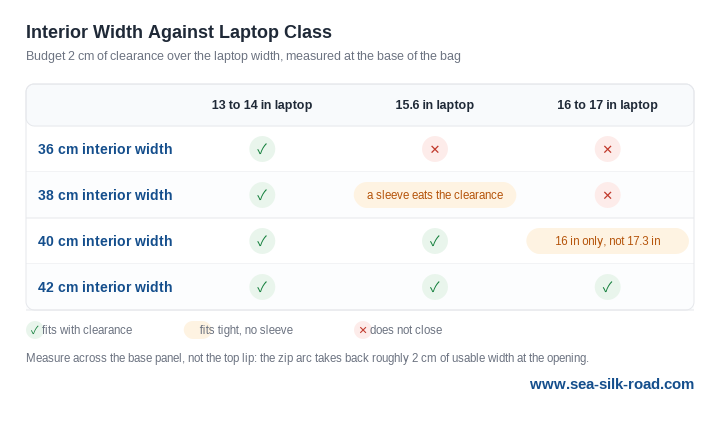
Budget 2 cm of clearance over the laptop width, then add whatever a sleeve needs. A 15.6 in laptop is typically 36 to 38 cm wide, so the interior needs 38 cm at minimum and 40 cm if the buyer will use a padded sleeve. The matrix below is the version we send with a quote, because it turns the laptop class into a width instead of leaving the buyer to guess.
Measurement 2: Depth Front to Back, Plus the Padding Squeeze
Depth is measured from the front panel seam to the back panel seam at the base, again inside the bag. A laptop needs its own depth plus about 1.5 cm so the machine does not press against the zip when the bag is carried flat. The hidden cost here is padding: a 10 mm foam back panel and a 5 mm lining compress the usable depth, and the compression increases once the bag is loaded with a charger and a folder.
This is the measurement to specify as a range rather than a single figure, because leather and foam settle. Ask for the depth after packing, not the depth of the empty bag on a bench. A briefcase that measures 6 cm empty and 4.5 cm packed will not take a 3 cm laptop plus a folder without bulging the front panel, and a bulging front panel is what buyers photograph and complain about.
Measurement 3: Gusset Height and the Documents Stack
Interior height is the number that gets ignored until the buyer tries to put an A4 folder next to the laptop. A4 is 29.7 cm tall, and a briefcase with a 27 cm interior height will not take a folder upright; it has to lie flat, which then eats the depth. If the briefcase is meant for a laptop plus documents, the interior height should clear 30 cm after the base board and lining, and the width should allow the folder to sit alongside the machine rather than on top of it.
Check the stack order on the sample: laptop at the back panel, folder in front, charger in the front pocket. If the folder has to go on top of the laptop, the bag is being used as a flat file and the depth figure becomes the binding constraint instead of the width.
Measurement 4: Zip Arc and the Real Opening
The zip does not run along the full width; it curves, and the curve takes back usable width at the mouth of the bag. On a briefcase with a rounded top, the clear opening at the widest point of the arc can be 2 cm narrower than the base interior, and that is the number the user meets every time they slide the laptop in. A bag can pass a fit test on the bench and still fail in daily use because the laptop has to be angled into a curved mouth.
Measure the clear opening with the zip fully open, pulling the two sides apart as far as the gusset allows. Then slide the actual laptop in and out five times. If it needs to be tilted more than about 30 degrees to enter, the opening is too tight for the customer base, whatever the interior width says.
Holding the Numbers Across 500 Units
A single approved sample proves the design, not the run. Leather stretches at the gusset, and a factory cutting panels by hand can drift 5 mm over 500 pieces. Put the four numbers on the purchase order with a tolerance of plus or minus 5 mm on interior width and depth, and check three pieces from the first carton, three from the middle and three from the last against a tape measure before the balance ships.

Two details travel with the numbers: whether the base board is fixed or loose, since a removable board cuts depth when inserted; and edge paint thickness, which can take another 2 mm per side off the interior with no change to the pattern.
Send the laptop model, the sleeve thickness and the documents the bag has to take, and we will quote against the four interior numbers on the briefcase range with a tolerance written into the order, so the 500-unit run lands where the sample landed.
Planning a promotional gift order?
Send your spec and target quantity for a quote and a digital proof.
Get a free quote


